Meta
Reality Labs

Case study in progress, please check again soon..

Facebook
Marketplace

Case study in progress, please check again soon..

Royal
Caribbean

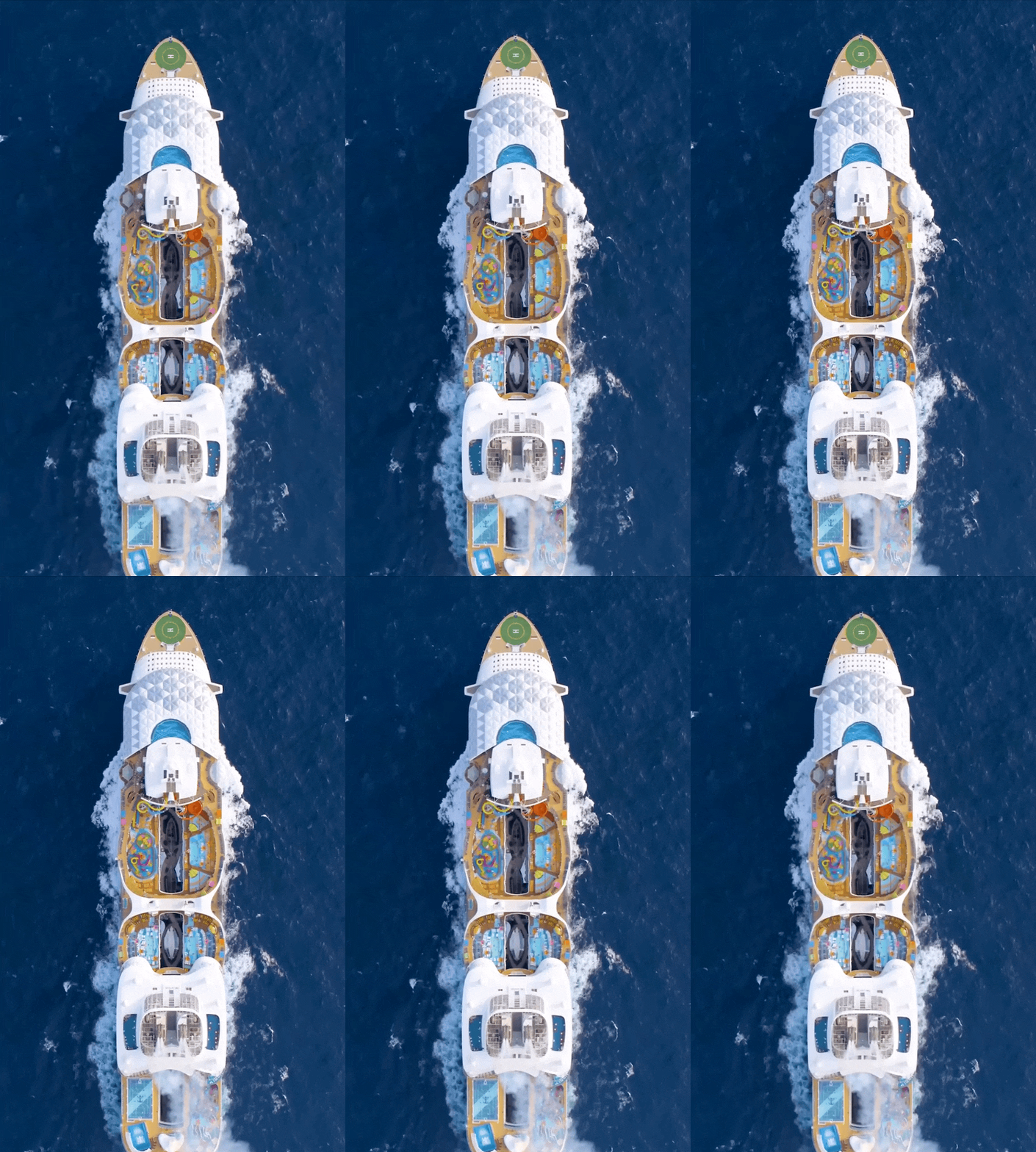
Leading a talented design team to innovate our guest and employee experiences around the world.

Allowing guests to enjoy their adventure, their way

I joined a growing design team and was tasked with overseeing the development of various projects meant to elevate the experience of our millions of guests that sail with us, and reduce pain points and friction for our thousands of employees around the globe.

As the commerce team we took on the redesign and re-architecture of our massive cruise planner platform, where guest can book and plan activities before their cruise. Working with changing requirements and a tight deadline, we brought design thinking into our processs and iterated on what the best experience for our guest can be.

Getting brand and stakeholder buy-in was crucial, coordinating with our research team, we would present design decisions with the behaviours learned and this let us make sure what we built was usable not just pretty.

Royal Cruise Planner Home mockup Royal Cruise Planner PDP mockup

Designing frictionless experiences

Being a co-located design team with a dedicated research team and design systems team, we optimized our feedback loop and included things like:

  • Ethnographical Research
  • Usability Testing
  • User Interviews
  • Advance Prototyping
  • Design Systems
  • Analytics

Leading our team we focused on what pain points we knew we had in our applications, and creative ways we can design a solution. While also juggling product requirements and technical limitations to provide more delightful experience for our guests. From letting a guest find a dinner reservation quickly, or being able to board with just their phone.

Royal Nextcruise App mockup Royal quick dining app mockup Royal express boarding app mockup

Thinking outside the box

Part of our responsibilites were pitching innovative ideas to the internal brands and the company, that could then get funded and become actual projects. Thinking out of the box and preparing deck after deck to showcase our ideas, let us design without bounds and push the limit of what our products can be.

Modernizing
Medicine

How we designed what our users didn't know they needed, and created a UCD process that let us re-imagine what the doctor-patient experience can be.

Innovating in an industry that did not want to change.

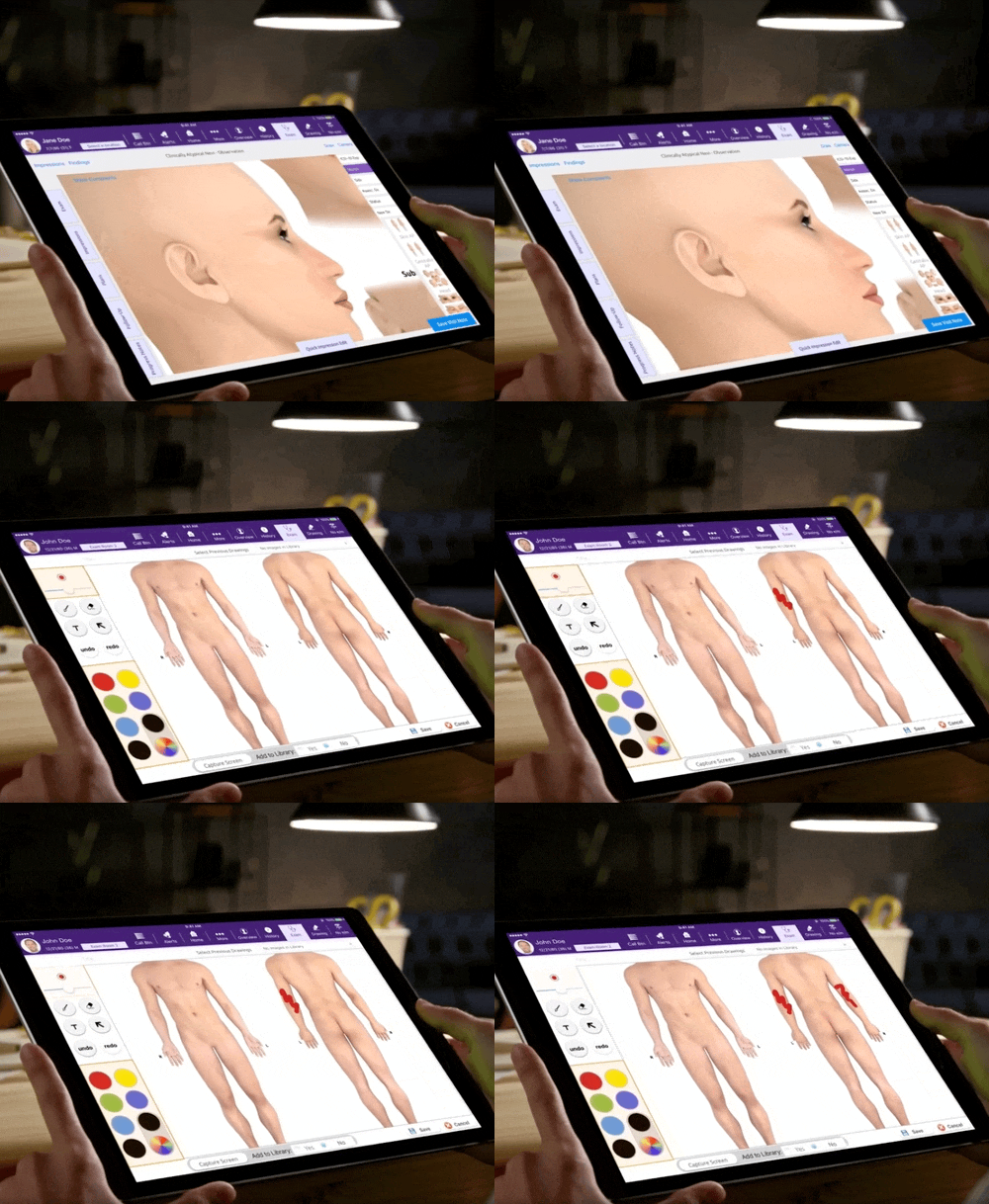
Often disregarded as the unsightly elephant in the room, entreprise and especially healthcare software is plagged as being out of date and bound by regulation. Trying to become a leader and innovator in this field required pushing the limit of what is accepted and figuring out what our users really needed. With a goal to revolutionize medicine and improve patient outcomes. We set out designing an all-in-one cloud based Electronic Health Records (EHR) system. Enabling our doctors to have more face to face interaction with their patients, and less time spent documenting the visit.

Modmed website dashboard

Improving lives by improving their workflow

Working with a user base that many times was 60+ or older, and had grown acustomed to a certain way of doing things was a unique challenge for us to design for. Trying to improve a workflow that they have been doing for decades required us to truly understand what their needs where and why they did the things they did.

Cue months of research, traveling all around the country to get a first hand experience sitting with the doctors who used our products, and documenting any and all artifacts that we could then document and act on.

Modmed eye tracking Modmed design sprints

Growing UX maturity as a company

Coming into a small ux team within a development-centric company was the starting point for the up-hill battle required to instill design-thinking and user research into our organization.

We focused on refining our research processes to include:

  • Ethnographical Research
  • Usability Testing
  • User Interviews
  • In-house Eye-tracking
  • Personas
  • Customer Journey Maps
  • Surveys
  • Analytics

By educating, promoting, and showing the value of UX, we were able to turn small wins into a wave of trust and influence to create a design and development process that let us validate, test, and research our solutions on a continual basis.

Modmed whiteboarding Modmed principle animation

Establishing a user centered design process

We then established clear design protocols to work together with product and development for a more consistent, and clear user experience:

  • Design Sprints
  • Advance Prototyping
  • Design Systems
  • Shared Components

By successfully getting to the stage where we were able to conduct our research and test appropriately during design, we were able to create actual solutions to our users pain points.

Which in our case meant more meaningful doctor-patient interactions, and less provider burn-out. Getting rid of unnecessary manual processes, giving them back some of their own time and helping them make more informed decisions.

Establishing design thinking grew our UX maturity throughout the company, helping us define and shape the vision of the product, and validate our results first hand.

Square

Designing an experience that can adapt to your business, while maintaining the quality of the Square brand.

Designing a self-serve kiosk for all.

Square had been growing exponentially in the consumer hospitality business, when we noticed that there was a gap in their product line up. They had the largest shares in the retail market, but had no kiosk technology to offer its clients.

After an exhaustive competitive analysis, we took apart what worked and what didn’t in todays current market.

We then explored different ideas of how we can design something that needs to be accessible to all, scale nicely from a tablet to a 32 in screen, and accommodate a wide variety of different restaurants and order types.

After many iterations, having mini design sprints with the team and devs, we started to put together the flow for our kiosk experience. User testing as we went, we had to be mindful that not only was our kiosk meant to delight the customer, we had to increase efficiency and make the process as streamlined as possible.

Square kiosk animation of placing an order

Flexibility for 2 million sellers

Chances are you have probably encounter an automated kiosk already in your normal shopping experiences. Many many times that experience is clunky, badly designed, and overly complicated.

We seeked to differentiate ourselves by not letting feature bloat get in the way of designing an experience that can be customized to support the variety of choices when choosing your meal, but still have the same intuitive flow for all users.

Square kiosk screen Square kiosk screen Square kiosk screen Square kiosk screen

Grubbrr

Streamlining efficiency and increasing consumer satisfaction across the hospitality sector.

Using technology to increase value for the business and the consumer

Grubbrr started out with a simple yet radical idea. How can you take the current hospitality experience and use technology to innovate it in all aspects. Not one but all. Front of house / back of house / for the customer / for the owner / etc …

Having a fully integrated experience where all touch points where in sync and optimized on the same system. Add some machine learning on top to figure out what your best selling items were, when to upsell which item to the customer, figuring out your staff schedule and when you should order stock.

This lead to a myriad of products both consumer facing and internal.

Square kiosk animation of placing an order Square kiosk animation of placing an order Square kiosk animation of placing an order Square kiosk animation of placing an order

How can the modern travel experience be improved?

One of the projects we focused on was a digital assistant that greets you as you walk in to your hotel room, and helps you with your stay. Being automatically integrated into the hotels database and using smart IOT beacons, we designed a tablet experience for the weary traveler. Being able to help you find your way around or order an uber was a fresh take on what value can it provide, more than just telling you when the pool closes ( but it does that too )

Smart table for hotel room with voice AI

Iterating based on user feedback

Based on our preliminary research, we user tested with our v1 designs remotely and in person and we noticed areas were we could improve our flow.

Validating different design options, we proceeded to iterate on our designs. Simplifying the choices for the user and having a more linear approach when selecting options.

This lead us to digital hotel experience that matched the branding of the hotel, enhancing the users satisfaction and increasing the value seen in their stay.

Smart table for hotel room mockup

Product design +
strategy

Leading teams to create world-class experiences that are usable. useful. delightful.

meta reality labs

Reality Labs

01

facebook markeplace

Facebook Marketplace

02

img09

Royal Caribbean

03

img10

Modernizing Medicine

04

design dna

More than just visual design, product designers are gatekeepers of experiences.

We allow, enable, and encourage different interactions across the digital and physical world. Our responsibility is to drive connections that are meaningful and impactful.

Sweating the details, having a holistic UCD approach, and being overly ambitious is the path innovation. Having a diverse background working with startups to fortune 500 companies, I learned how to not only navigate between being tactical and strategic, but the power of influence.

By building influence across organizations, effectively communicating design decisions, and delivering measurable results, you set your team up for success and on track to deliver meaningful change.